
Shouldn’t I know This…?
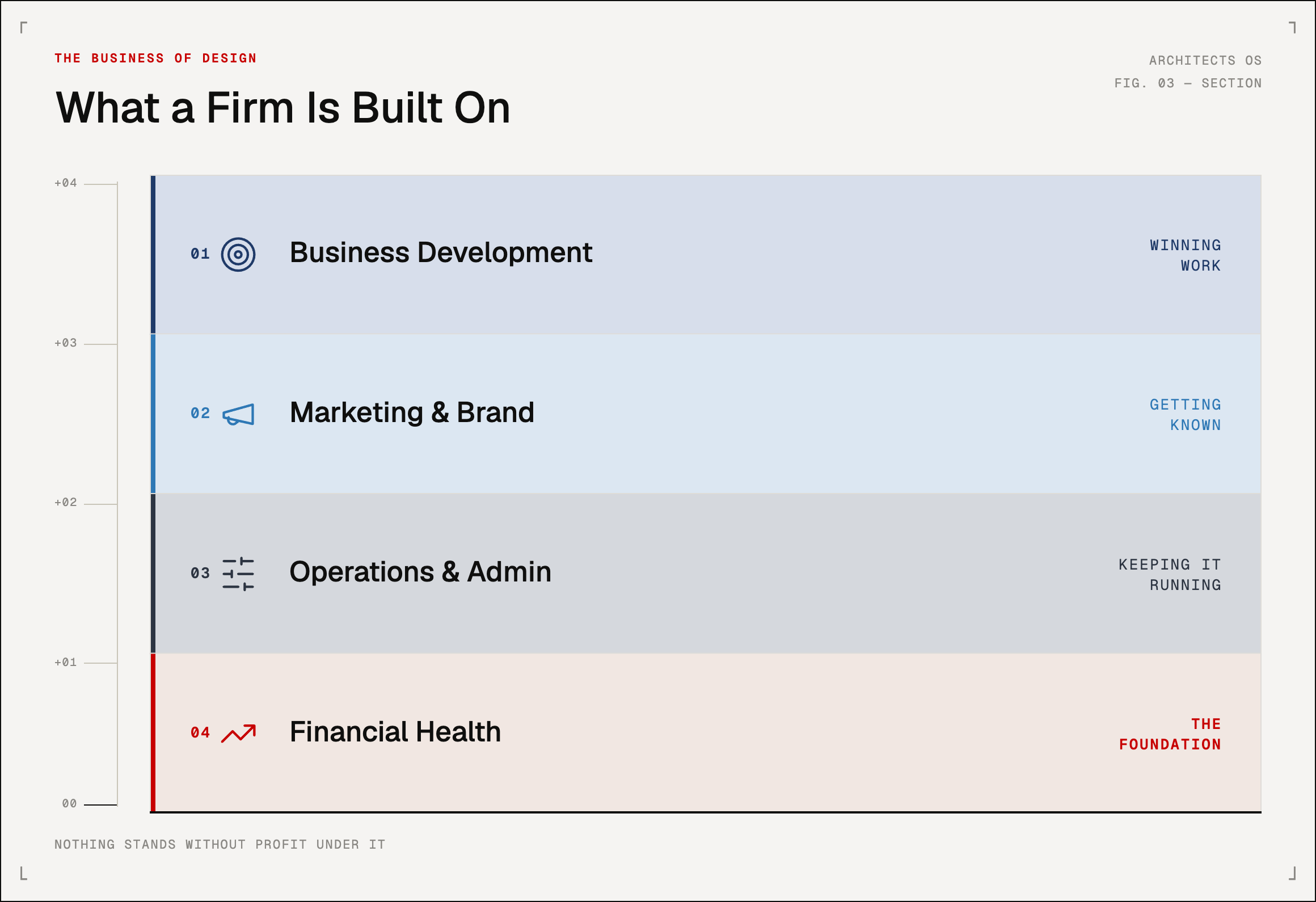
The Business Side of a Design Practice
For more than 25 years, I have worked in the architecture and engineering profession. Today, I am a Partner in a 30-person architecture and engineering firm, helping lead the people, projects, finances, and strategy that shape our practice.
But for much of my career, I did not feel prepared to be a business leader.
Design school taught me how to think critically, solve complex problems, communicate ideas, and create spaces that improve people’s lives. It taught me how to become an architect. What it did not teach me was how to run an architecture firm.
There were no studios focused on cash flow, overhead rates, utilization, project profitability, or financial forecasting. We did not discuss how to manage difficult conversations, develop future leaders, build a healthy culture, evaluate new opportunities, or create a strategic plan for sustainable growth.
Like many firm leaders, I learned those things while already sitting in the leadership seat.
For years, I experienced a sense of imposter syndrome—not as a designer, but as a business leader. I was responsible for making decisions that affected employees, clients, projects, and the long-term health of the firm, yet I often felt as though I was missing the instruction manual everyone else had received.
The truth is, there was no instruction manual.
I had to teach myself the fundamentals of running a design business. I learned by asking questions, reading books, studying financial reports, seeking advice, attending conferences, making mistakes, and paying close attention to what worked—and what did not.
Over time, I began to better understand the relationship between design excellence and business performance. A profitable firm can invest in its people, technology, training, and future. A well-managed firm can deliver better projects and provide greater stability for its employees. Strong financial performance is not in conflict with good design. It helps make good design possible.
Architects Operating System was created to shorten that learning curve for other firm leaders.
AOS is designed for principals, project managers, emerging leaders, and firm owners who are excellent at serving clients and delivering projects but may still feel uncertain about the business side of practice.
The goal is not to turn architects and engineers into accountants. It is to provide clear, practical tools that help firm leaders understand their businesses, make better decisions, manage their teams, improve project performance, and grow strategically.
You should not have to spend 25 years assembling this knowledge through trial and error.
Through templates, dashboards, frameworks, calculators, and practical guidance, Architects Operating System will help translate complicated business concepts into tools that can be applied immediately inside a design firm.
I know what it feels like to sit in a leadership meeting and wonder whether you truly understand the numbers. I know the weight of making decisions that affect the livelihood of others. I also know how empowering it is when the business side of practice finally begins to make sense.
You are not alone, and you are not an imposter.
You simply need better tools.
Welcome to Architects Operating System.